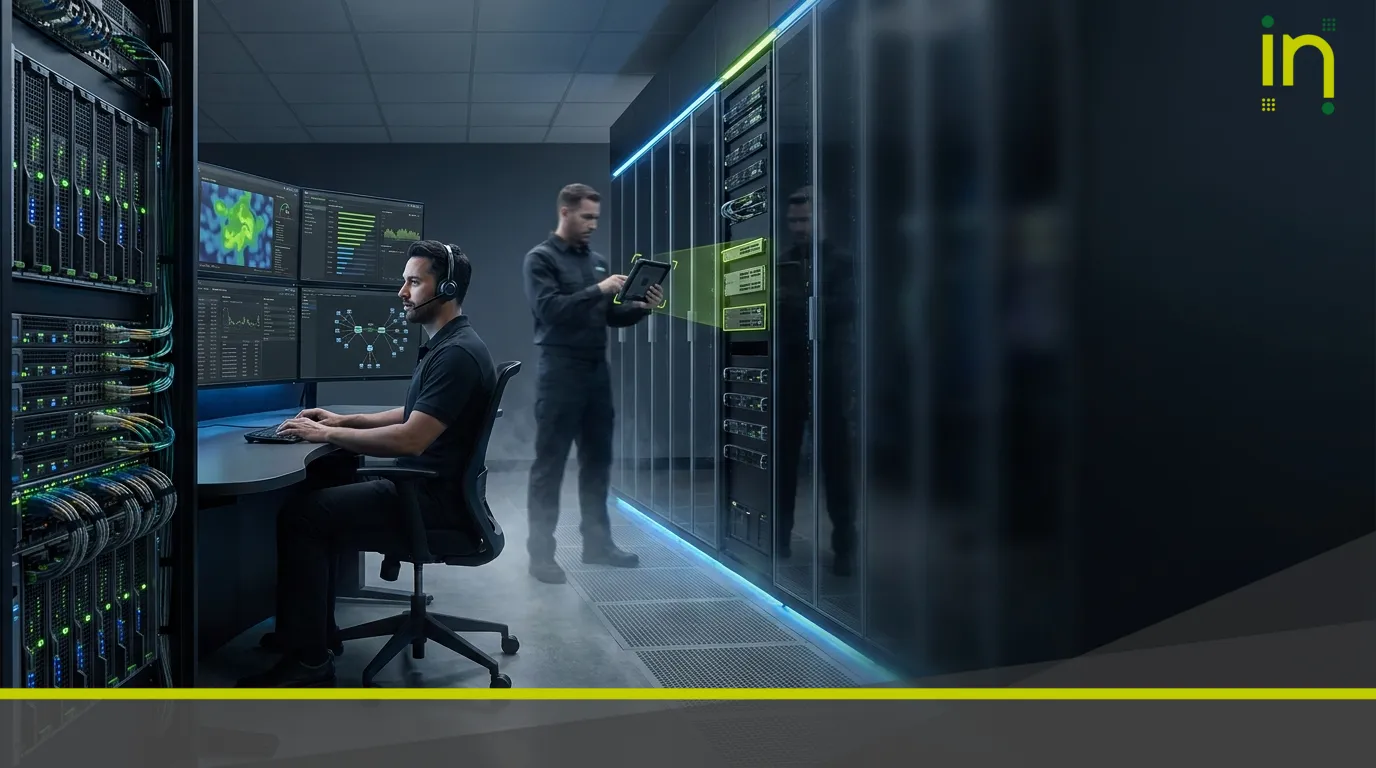



Securing massive AI data center grids requires rethinking infrastructure resiliency. We explore strategic frameworks to protect 8,000-acre footprints against evolving physical and cyber threats.
The race for AI dominance isn’t just about code; it’s about unparalleled physical scale. Organizations are now planning 8,000-acre data center grids to house the staggering compute power required by next-generation models. This unprecedented concentration of critical infrastructure creates a massive, attractive target, making comprehensive AI data center security the foundational challenge of the era.
For CTOs and VPs of Technology, the mandate is clear but complex. You must build infrastructure that is not only powerful but inherently resilient. A single vulnerability in a facility of this magnitude can lead to catastrophic failures, compromising intellectual property, massive datasets, and operational continuity.
Traditional security perimeters are utterly insufficient for these sprawls. The blast radius of any operational disruption—whether from a sophisticated cyber-physical attack, a coordinated localized failure, or an extreme weather event—is now measured in gigawatts of stranded capacity and potentially billions of dollars in lost value and trust.
The High Stakes of Systemic Fragility
When you concentrate 8,000 acres of critical infrastructure, minor incidents can cascade into grid-scale disasters. Consider the ripple effects. A successful breach doesn’t just take down a single server rack. It might compromise an entire cooling subnet, triggering massive thermal runaways across a critical sector.
This operational dependency is the vector that keeps CISOs awake. Beyond immediate downtime, a grid-scale incident erodes the trust required to host sensitive enterprise AI workloads. It threatens compliance with emerging data sovereignty and critical infrastructure regulations. The inertia required to recover from a systemic compromise at this scale could take weeks, not hours, stalling innovation.
Looking to streamline your cross-border IT operations with guaranteed global SLAs? Contact Inconnet Global today for a tailored infrastructure assessment.
Securing 8,000-Acre AI Data Centers: A Strategy for Resiliency
Architecting Resilience for Unprecedented 8,000-Acre Footprints
Resiliency for an 8,000-acre footprint cannot be an afterthought; it must be the core architecture. Effective AI data center security in this context demands a fully integrated, multi-layered approach. It merges physical hardening with sophisticated cyber-physical resilience. This is not about building higher walls; it is about engineering intelligent, self-healing systems.
Architecture First: Designing for Inherent Immunity
The first pillar of this strategy is architectural decentralization. We must move away from monoliths. Designing the 8,000-acre grid as a series of semi-autonomous, interconnected cells isolates failures. If one cell is compromised, the broader grid isolates it, preventing cascading effects.
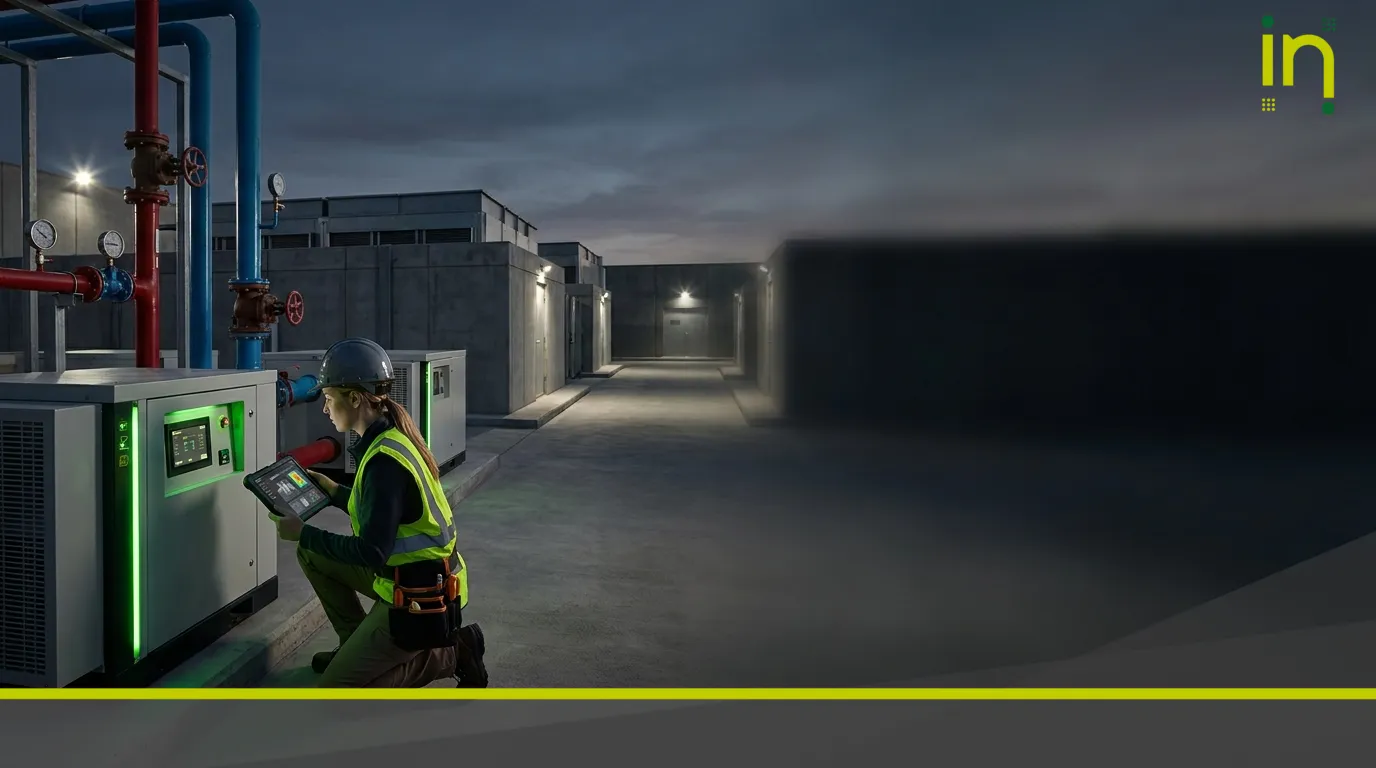
This approach must extend to power and cooling. Dedicated, localized power generation and sophisticated, air-gapped cooling control systems are non-negotiable. This prevents a cyber-attack on a central utility from compromising the thermal stability of the entire AI cluster.
Intelligent Converged Infrastructure Monitoring
You cannot protect what you cannot see, and at this scale, visibility is everything. We need a unified pane of glass. This system must ingest and analyze petabytes of telemetry data from physical sensors (cameras, thermal imagers, vibration sensors) and network systems in real-time. This creates a high-fidelity digital twin of the entire operation.
Advanced anomaly detection—powered, ironically, by specialized AI models—can identify subtle indicators of compromise or failure that human operators would miss. An unusual pattern of vibration in a backup generator or a micro-deviation in a cooling loop could signal an impending physical fault or an initial probing attack.
| Security Layer | Key Resiliency Benefit | Estimated ROI/Impact |
|---|---|---|
| Cellular Grid Architecture | Fault & Breach Isolation | 90% reduction in blast radius of incidents |
| AI-Powered Anomaly Detection | Early Warning of Failures/Attacks | 50% faster Mean Time to Detect (MTTD) |
| Air-Gapped OT/ICS Systems | Prevents OT Compromise from Cyber Attacks | Near-zero risk of remote-driven critical failure |
The Human-Machine Teaming in Operations
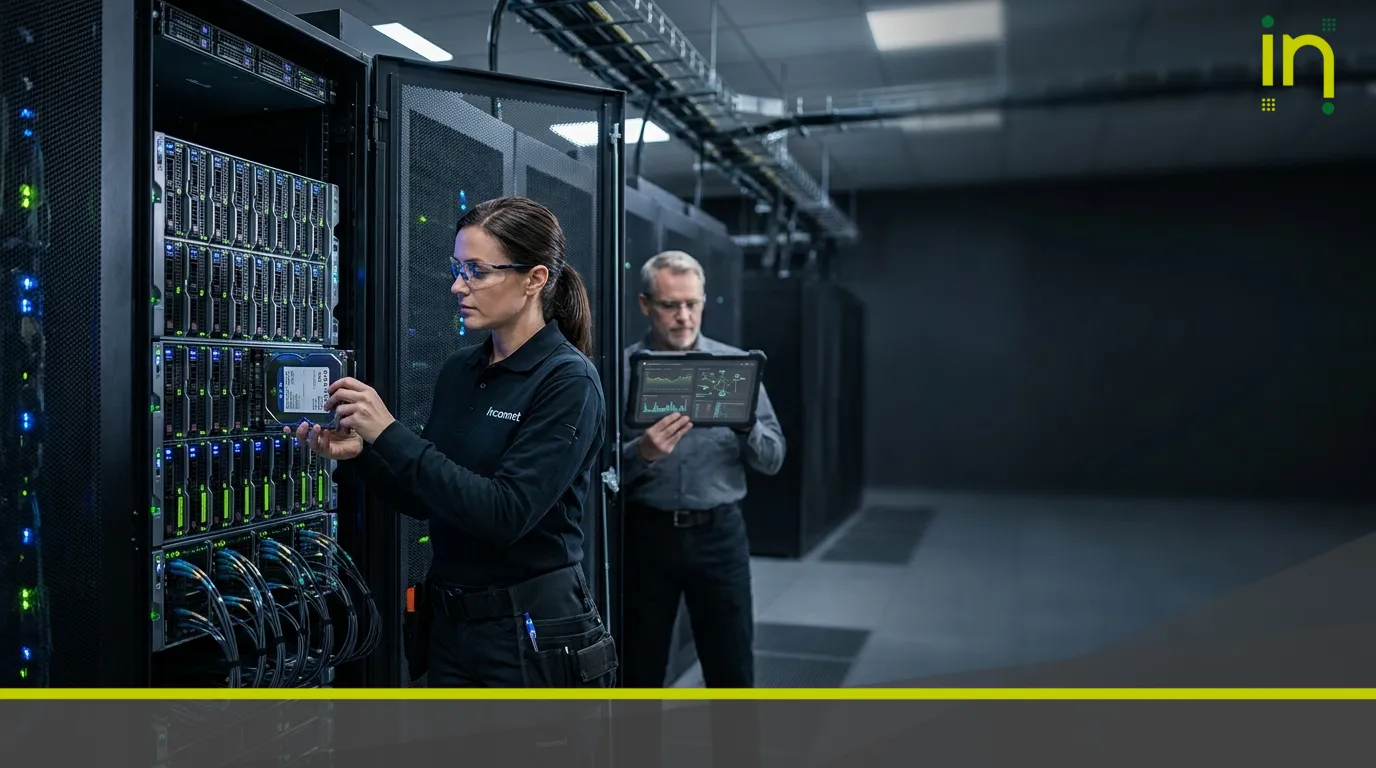
Technology alone isn’t enough. Resiliency is baked into operational procedures. At this scale, automated response playbooks are essential for immediate isolation and containment. However, complex decision-making in high-stakes scenarios requires human expertise.
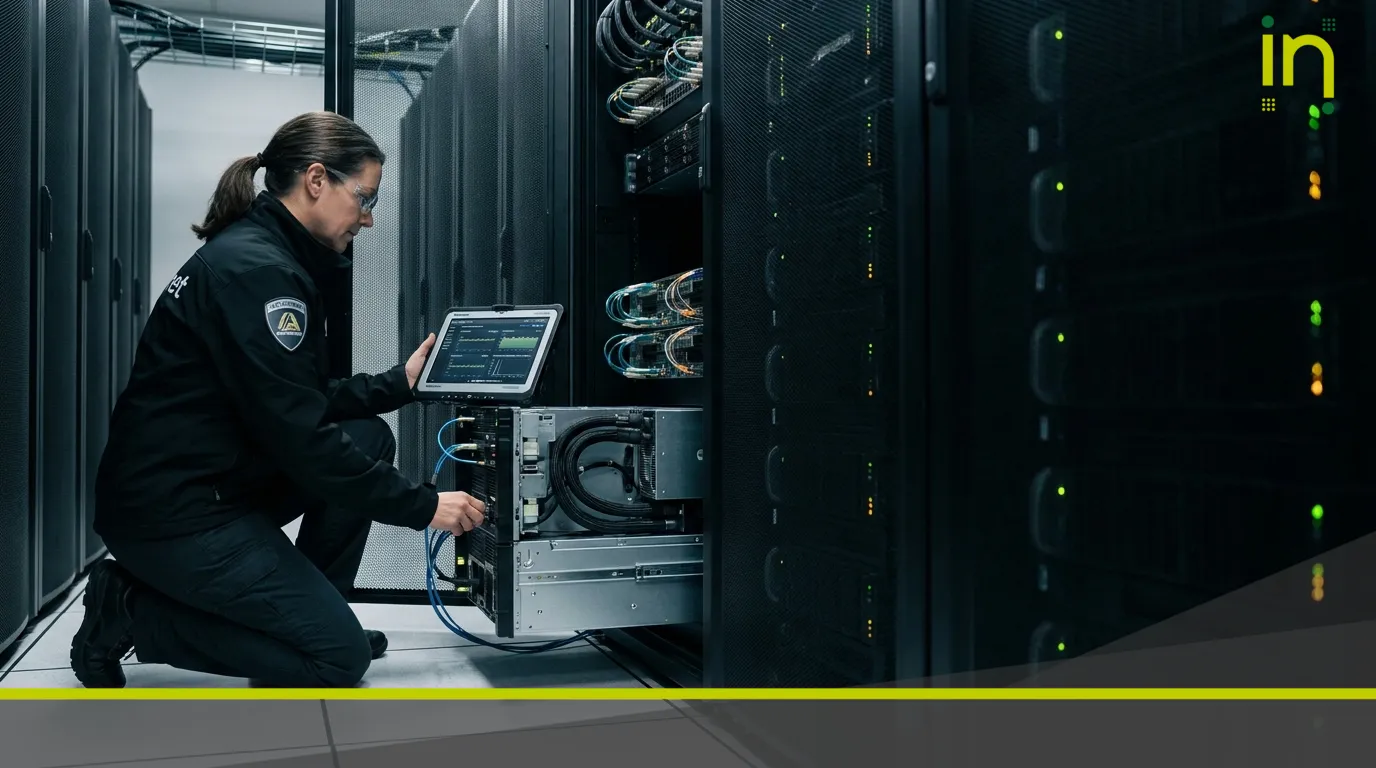
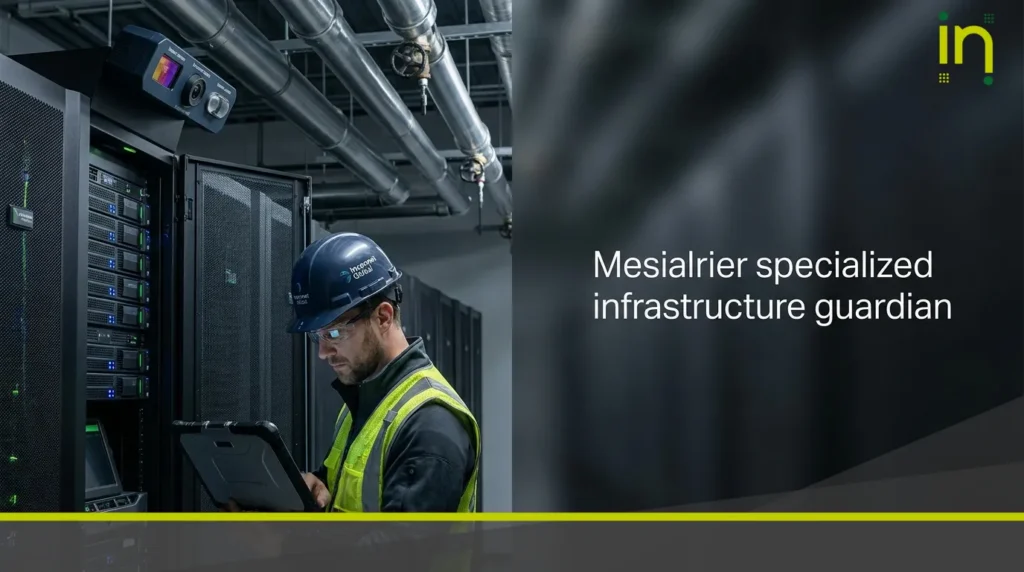
We must invest in specialized training for site personnel, transforming them into proactive infrastructure guardians. They must operate in lockstep with automated systems, validating anomalies and managing the complex recovery processes that exceed the capabilities of current AI.
Securing 8,000 acres isn’t just about more cameras and firewalls; it’s about engineering an infrastructure that can anticipate, absorb, and recover from shocks. It requires a holistic, intelligent approach to AI data center security that bridges the physical and cyber worlds.
Navigating 2026 and Beyond: The Inconnet Advantage
The regulatory landscape for massive data centers will intensify significantly by 2026. Governments will mandate stringent resiliency standards and verifiable AI data center security protocols for these critical facilities. Forward-thinking VPs of Technology are already planning for compliance and proactive risk management.
This is where Inconnet Global provides decisive value. As your strategic technology partner, we deliver the specialized consulting and global technical services required to design, deploy, and manage resilient data center infrastructure at unparalleled scale.
We don’t just provide hardware; we help you architect immunity. Our expertise ensures your massive AI grid can withstand emerging physical and cyber threats while maintaining absolute operational continuity. Partner with Inconnet Global to secure your scalable future.
FAQ
💡 How can physical security scale to effectively monitor an 8,000-acre site?
Scaling physical security to an 8,000-acre site is indeed a massive logistical challenge, but it is achievable through a combination of technology and intelligent design. We must move beyond traditional perimeters. This involves deploying a nested series of security zones and leveraging advanced technologies like autonomous drone patrols with thermal imaging, sophisticated ground-based radar, and ubiquitous video analytics. All of these systems must feed into a centralized, AI-enhanced command center that can intelligently filter noise, identify genuine threats, and direct human response teams with high precision. Designing the site into semi-autonomous security cells further enhances manageability.
💡 What are the primary attack vectors targeting massive AI data center infrastructure?
Attack vectors for an 8,000-acre grid are highly diverse and sophisticated. They include traditional data breaches aiming at IP theft and model manipulation, but also extend to powerful cyber-physical attacks. Malicious actors may target vulnerable OT (Operational Technology) systems, such as cooling controls or power distribution units, to cause physical damage or massive operational downtime. Coordinated physical attacks against key infrastructure bottlenecks—like substation interfaces or critical fiber ingress points—are also serious concerns, given the immense impact of any disruption. Addressing these risks requires a unified strategy for robust AI data center security.
💡 How can we ensure operational continuity during a grid-scale incident at an 8,000-acre facility?
Operational continuity at an 8,000-acre scale depends on inherent architectural resilience. This is achieved by designing the data center grid with substantial redundancy and decentralized systems. Adopting a modular, cellular architecture ensures that if one section fails or is compromised, it can be physically and logically isolated, allowing other sections to continue operating. Furthermore, implementing robust disaster recovery protocols, maintaining localized backup power and cooling systems, and having pre-approved, automated response playbooks are essential. This approach minimizes the blast radius of any incident and accelerates recovery, ensuring that critical AI workloads can remain available.